"We go to our jobs, collect our pay. Believe we're gliding down the highway when in fact we're slip-sliding away" - Paul Simon.
I understand it's easy to dismiss or even ignore big-picture news while life is happening. Every single business owner is already affected by external events and, although it's important to stay informed, many owners are saying: "I need to collect these outstandung invoices and make payroll!" Meanwhile, the world is experiencing the biggest disruption of critical system supplies I have ever seen in my lifetime and I'm pretty old. Just in case you haven't noticed; we are in WW3 right now. No waiting.
"Sometimes decades pass and nothing happens. Then, in just a few weeks decades happen" - V. Lenin
As things sit right now Diesel fuel which is the lifeblood of our economy is at roughly $190 per barrel and over $5.50 per gallon at the pump. That is the high of the 2020 COVID period and even more unsustainable than it was then considering the dollar's purchasing power has dropped by at least 30% since that time. Make no mistake, the increase in Diesel costs affects absolutely everything we do because of it's use in transportation, mining, agriculture and shipping.
"the average U.S. diesel price at $5.47 per gallon, up by 8% in one month and more than 40% higher from the year-ago average price of $3.69."
The "Crack spread" which is the premium above the price of crude oil refiners charge for the finished product (Diesel) reached double digits for the first time in history:
"The diesel crack spread in the United States hit triple digits this week, for the first time ever. The premium over crude prices jumped to as high as $102 per barrel on Monday, before easing slightly to about $100 a barrel on Tuesday"
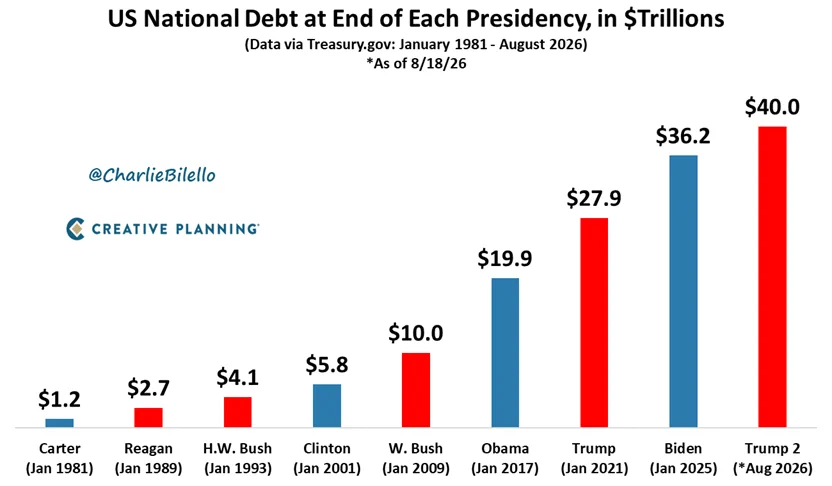
Also last week, the US debt reached $40 Trillion which was expected. After the last year and a half it really seems as if it doesn't matter who we vote into office because we always seem get the same policies regardless of who is President.
“The Federal Government cannot continue to spend more money than it takes in.” - Jimmy Carter (1978)
“For decades we have piled deficit upon deficit, mortgaging our future and our children's future.” - Ronald Reagan (1981)
“We must bring the Federal budget deficit under control.” - George H.W. Bush (1989)
“We must put our fiscal house in order.” - Bill Clinton (1993)
“We can pay down a large portion of the national debt.” - George W. Bush (2001)“
Families across the country are tightening their belts … the federal government should do the same.” - Barack Obama (2010)
“We will start to balance our budget and pay down our debt.” - Donald Trump (2016)
“My plan will reduce the deficit.” - Joe Biden (2022)
“We will balance the federal budget.” - Donald Trump (2024)
The most critical issue facing business owners looking to finance their expenses or simply fuel further growth is, where are interest rates headed? Last week US Treasury Secretary, Scott Bessent tried (and failed) to mitigate the interest of 30-year Treasury bonds. The reason why that is important is because those bonds as well as the 10-year maturity Treasuries serve as a benchmark for all interest rates including mortgages. That is, if the government cannot effectively lower those rates then all interest rates will rise making borrowing more expensive than it already is at a time when so many other pressures are affecting the economy. If in addition to inflation and restricted supplies of critical materials we also have higher borrowing costs that will be bad to say the least.
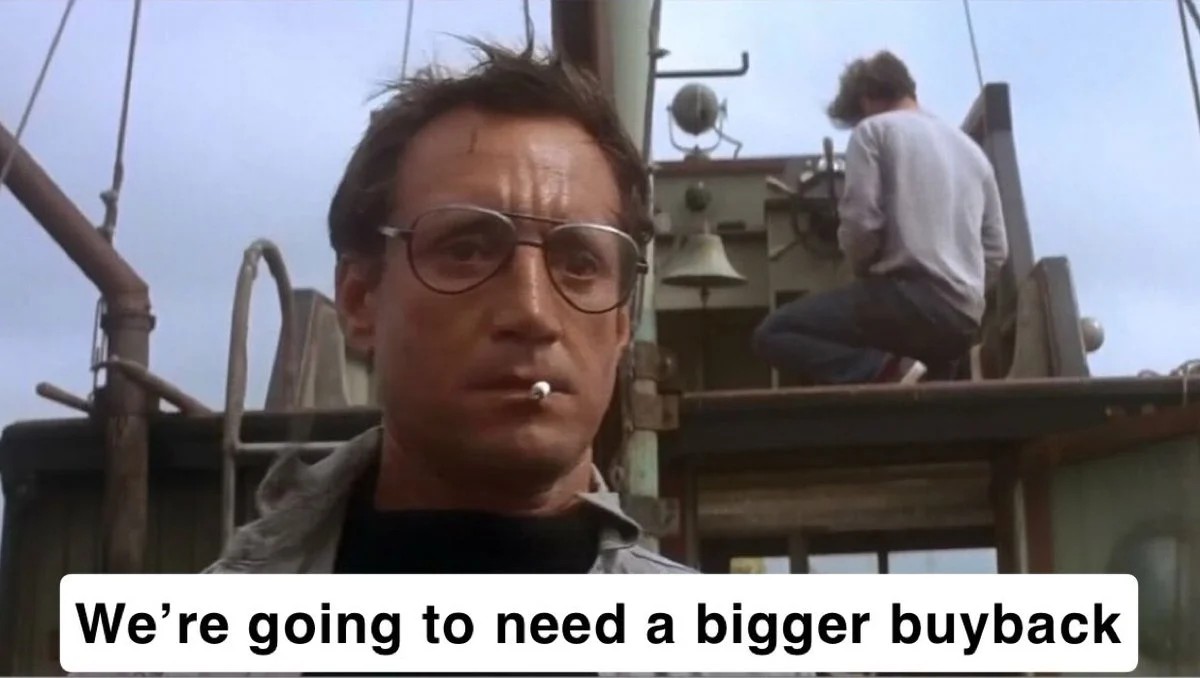
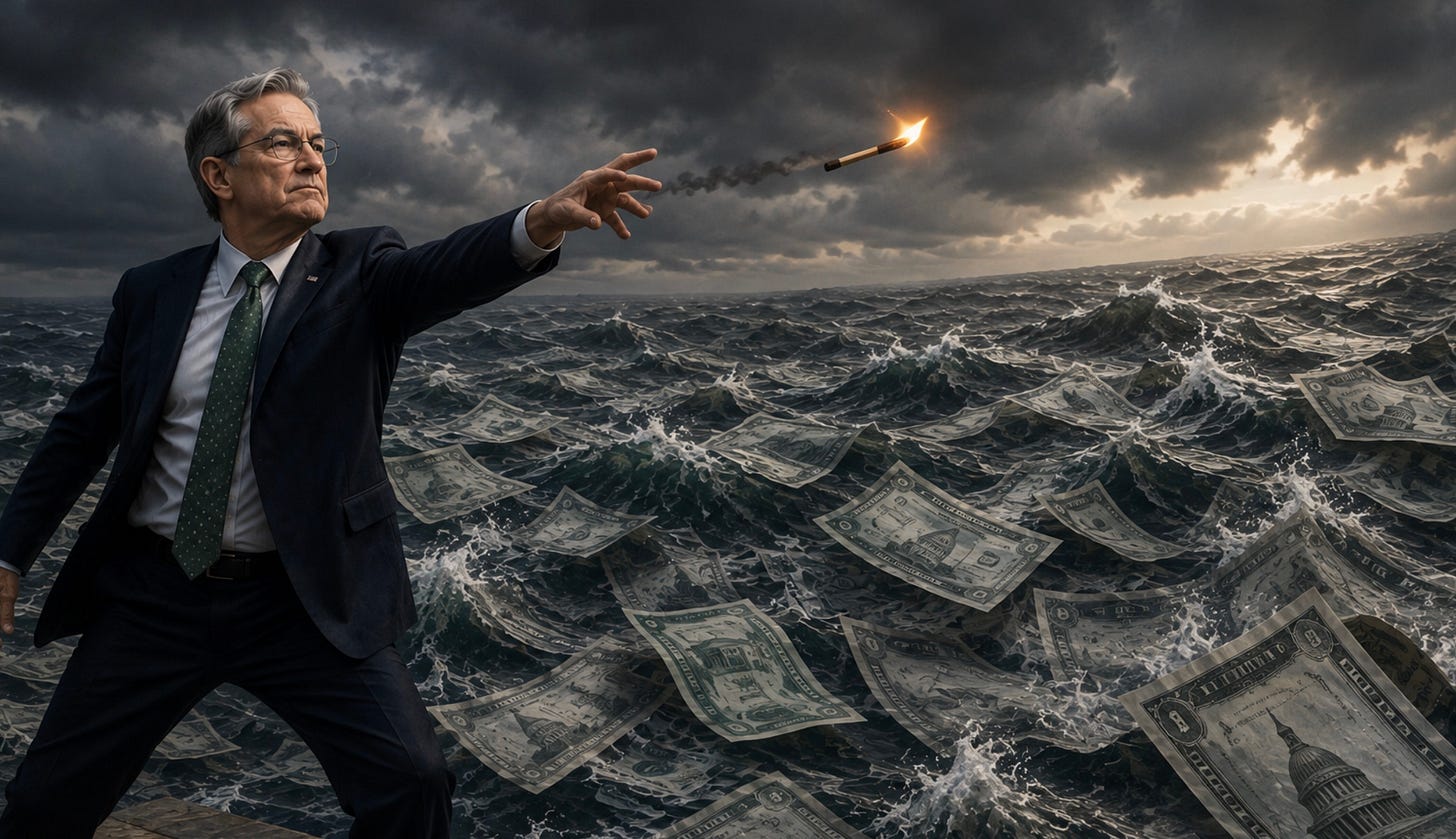
"Nobody knows exactly where the breaking point is, but we are getting closer to finding out. The 10 year Treasury ended the week around 4.7%, while the 30 year pushed above 5.3%. Washington intervened with larger Treasury buybacks, yields briefly fell, and then the selling resumed. So much for throwing a match to try and dry up the ocean of free market bond trading that takes place globally."
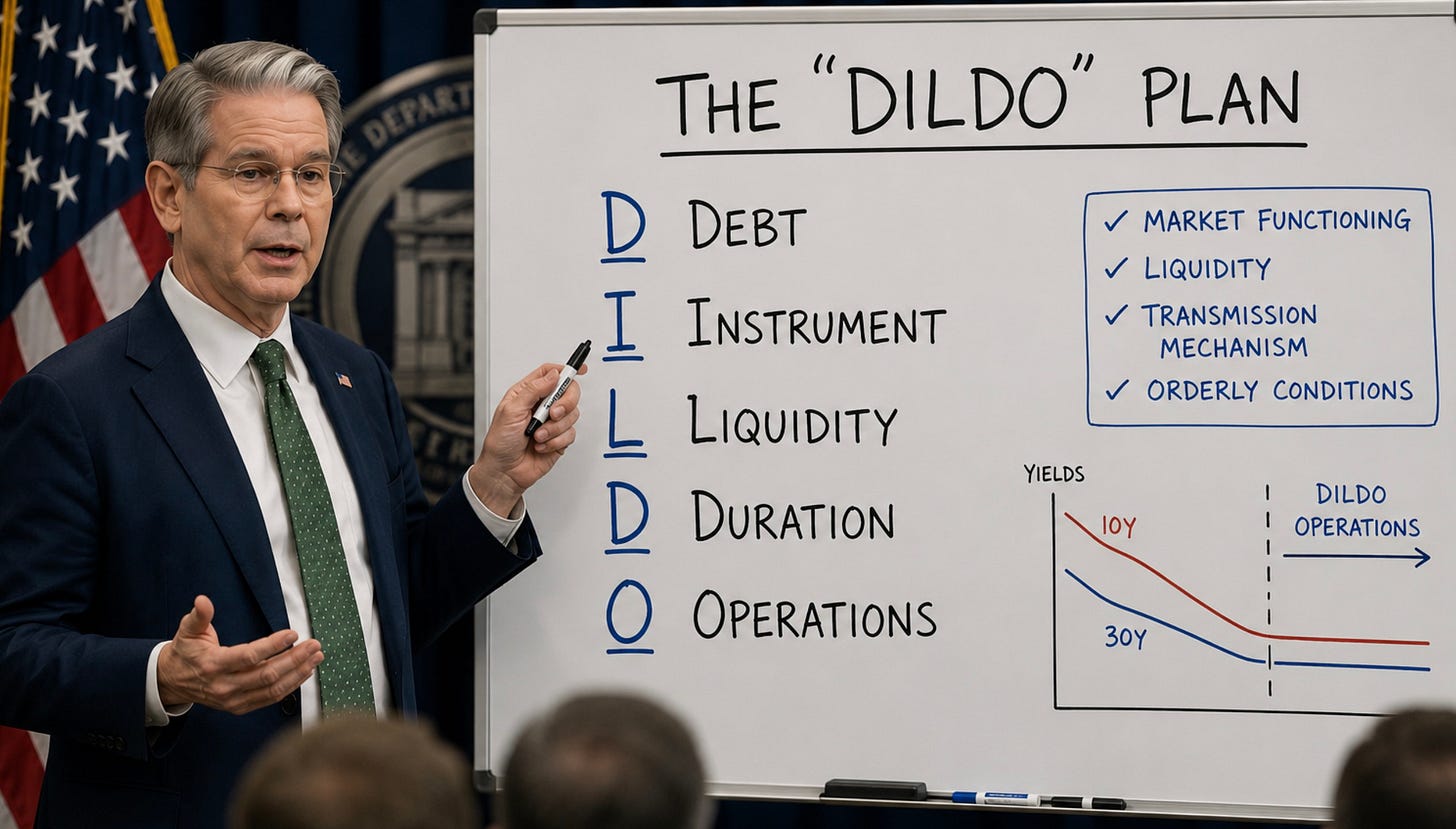
"A 10 year approaching 6% fundamentally changes the policy debate. The question stops being whether the Fed cuts 25 or 50 basis points. It becomes how the Fed prevents the long end from tightening financial conditions regardless of what it does with overnight rates. They’d call it something innocuous. It’s not QE…it’s the DILDO plan: Debt Instrument Liquidity and Duration Operations."
"Scott Bessent says he doesn’t understand why oil is going up. On Thursday, hours after announcing that Washington would keep its naval blockade and hit Iran with the toughest sanctions in history, the Treasury Secretary watched crude climb and told CNBC, “I’m not sure why oil has popped up on this.” He called it a spike he doesn’t understand, and waved it off as noise. Buried in the bafflement is a remarkable assumption: that slapping draconian sanctions on a major oil producer should make oil cheaper. By Friday Brent was near $94, a second straight weekly gain above 5 percent, with Trump promising an “economic D-Day” on Monday."
As we crash through this unprecedented reality there are a few assumptions I would advise all business owners to make:
- Expect higher-for-longer costs on fuel and raw materials
- Interest rates will drift higher and borrowing will become harder even if rates remain at these levels.
- Consumers will pull back even further than they have already as costs bite them
- Hiring quality workers will be challenging as good employees remain cautious about moving to new jobs
- Government policies will make things worse as they desperately try to plug the gaping holes in this leaking ship
Here are a few interesting articles I saw last week:
"There is no mystery. This is a Treasury Secretary watching the wrong gauge. Oil is not priced off sanctions announcements; it is priced off barrels reaching refineries."
"The oil market is finally pricing in a prolonged Hormuz crisis, with flows through the strait down to roughly 11% of pre-war levels."
"If we get to 6%, the most important question in markets will no longer be whether the Fed cuts rates. It will be how long the free market is ever allowed to keep setting the price."
"The structural vulnerabilities that triggered the 2008 Global Financial Crisis are re-emerging in a different form."
"In such an economy, higher energy prices can create a multilayered shock: refined-product prices rise, inflation remains elevated, the Federal Reserve has less room to cut interest rates, and long-term rates remain high."
"In May of this year, America’s debt surpassed its GDP – something that hasn’t happened since WWII."
"You don’t need “fintech” and fancy apps. You literally need $12 to buy a burrito for a lunch.
"How feasible is Trump’s strategy? Is Iran in as desperate straits as Treasury Secretary Bessent suggests?"